How Are You in Thai? Sabai Dee Mai, Polite Forms and Replies
Learn how to say how are you in Thai: สบายดีไหม (sabai dee mai?) with polite forms, common replies and a short beginner dialogue you can use today.
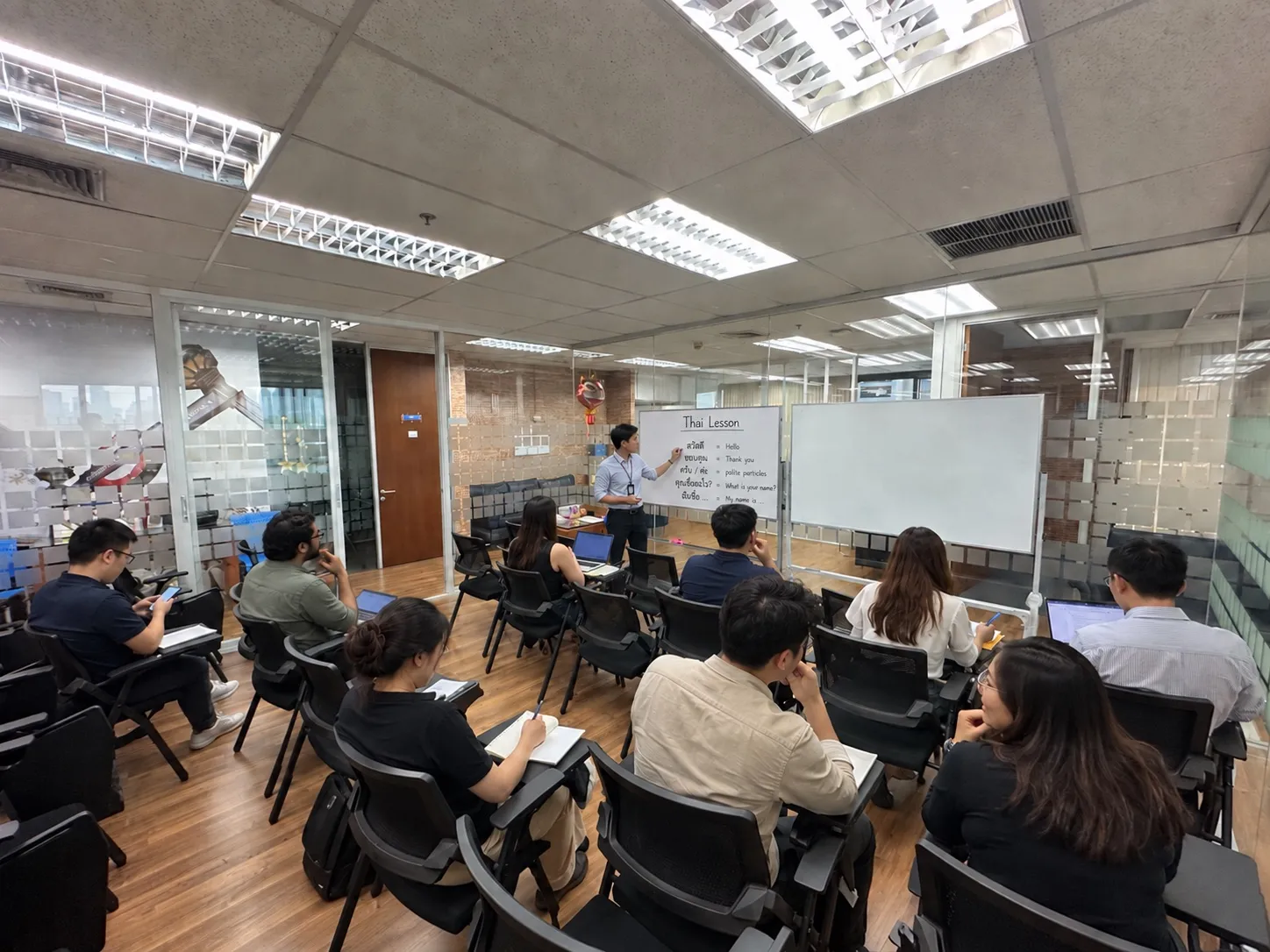
The standard beginner way to ask “How are you?” in Thai is สบายดีไหม (sabai dee mai?), with สบายดีไหมครับ (sabai dee mai khrap?) for a polite male speaker and สบายดีไหมคะ (sabai dee mai kha?) for a polite female speaker.
Once you know that one question and the polite ending that fits you, you can use it in everyday conversations in Thailand and reply when it comes back to you.
All romanization in this guide is approximate. Thai script and Thai tones do not map perfectly onto English letters, so treat our romanization as a starting point for your ear, not a replacement for listening and practice.
In this lesson you will learn the core question, the polite endings that change with your gender and with questions versus statements, the standard positive reply, and one broader check-in question. We finish with a short dialogue you can rehearse today. If you want to start with greetings instead, see our guide on how to say hello in Thai.
Step 1: Start With the Core Question, Sabai Dee Mai
The core question is สบายดีไหม (sabai dee mai?), the standard Thai way to ask how are you. Thailand’s official visitor guidance lists it in its basic phrase section, and the Department of Transport’s travel guidance gives the learner-friendly pronunciation as approximately sa bai dee mai.
Break it into 3 parts and it becomes easy to hold in your head:
- สบาย (sabai), the part that carries the sense of being comfortable or well
- ดี (dee), which adds the sense of good
- ไหม (mai), the word that turns the phrase into a question
Together, สบายดี (sabai dee) carries the sense of being well or comfortable, and ไหม (mai) makes it a question rather than a statement. That is the whole engine of the phrase. Said on its own, สบายดีไหม (sabai dee mai?)
is neutral and complete, and every polite version in the next step is built directly on top of this base. Practice saying sa bai dee mai out loud 3 or 4 times before moving on, so the syllables settle before you add an ending.
Step 2: Add the Right Polite Ending, Khrap or Kha
Use ครับ (khrap) as a male speaker, ค่ะ (kha) for female statements and คะ (kha) for female questions. This is the rule explained by the Royal Society’s article on Thai sentence-ending particles, and it is the detail beginners most often get wrong.
| Speaker | Statement ending | Question ending | Example question |
|---|---|---|---|
| Male | ครับ (khrap) | ครับ (khrap) | สบายดีไหมครับ (sabai dee mai khrap?) |
| Female | ค่ะ (kha) | คะ (kha) | สบายดีไหมคะ (sabai dee mai kha?) |
Notice the asymmetry. A male speaker keeps ครับ (khrap) in both statements and questions, so there is nothing extra to track. A female speaker uses คะ (kha) when asking a question and ค่ะ (kha) when making a statement, and the 2 endings are written differently even though our approximate romanization makes them look nearly identical. The difference is real in Thai script and in speech.
This matters because the particle is what marks your speech as polite. สบายดีไหม (sabai dee mai?) on its own is correct but abrupt, while สบายดีไหมครับ (sabai dee mai khrap?)
or สบายดีไหมคะ (sabai dee mai kha?) sounds courteous and complete. When you are unsure of anything else in a sentence, choosing the correct polite ending matters as much as the phrase itself.
Step 3: Reply Naturally With Sabai Dee
The standard positive reply is สบายดี (sabai dee), meaning “I am fine” or “I am well”. Add the polite ending and you get the full forms: สบายดีครับ (sabai dee khrap) for a male speaker and สบายดีค่ะ (sabai dee kha) for a female speaker.
| Reply | Romanization | Who says it | When to use it |
|---|---|---|---|
| สบายดี | sabai dee | Any speaker | Neutral short reply, fine with friends |
| สบายดีครับ | sabai dee khrap | Male speakers | Polite reply in most everyday situations |
| สบายดีค่ะ | sabai dee kha | Female speakers | Polite reply in most everyday situations |
The mechanics are simple once Step 2 is clear. You take the reply สบายดี (sabai dee), which is a statement, and attach your own statement ending. Men attach ครับ (khrap), women attach ค่ะ (kha). There is no question particle to think about here, because you are answering rather than asking.
This closes the loop of a real exchange: you can now ask and answer with the same short vocabulary. If you are building a wider set of everyday expressions, our collection of useful Thai phrases gives you more to attach to this foundation.
Step 4: Widen the Check-In With Pen Yang Rai Bang
Another verified Thai way to ask how someone has been or how things are generally is เป็นอย่างไรบ้าง (pen yang rai bang?). This question is listed alongside สบายดีไหม (sabai dee mai?) in a general Thai phrase reference, and it gives your check-in a broader reach.
Think of the difference this way. สบายดีไหม (sabai dee mai?) is the fixed formula: short, direct, and the natural first question for a beginner.
เป็นอย่างไรบ้าง (pen yang rai bang?) opens the question up, asking how things have been or how things are in general rather than checking a single state.
The useful part is that เป็นอย่างไรบ้าง (pen yang rai bang?) takes the same polite endings from Step 2. A male speaker adds ครับ (khrap) and a female speaker adds คะ (kha), because it is a question. Nothing new to memorise, just the same particle rule applied to a new phrase.
Step 5: Put It Together in a Short Dialogue
A complete beginner exchange is just 2 lines each: ask สบายดีไหมครับ (sabai dee mai khrap?) or สบายดีไหมคะ (sabai dee mai kha?), then reply สบายดีครับ (sabai dee khrap) or สบายดีค่ะ (sabai dee kha). That is the core conversation, and it works in a shop, on the street or in a classroom. You can then extend it with the broader check-in from Step 4.
Male speaker dialogue:
Core 2-line exchange:
- A: สบายดีไหมครับ (sabai dee mai khrap?)
- B: สบายดีครับ (sabai dee khrap)
Optional extended dialogue:
- A: เป็นอย่างไรบ้างครับ (pen yang rai bang khrap?)
- B: สบายดีครับ (sabai dee khrap)
Female speaker dialogue:
Core 2-line exchange:
- A: สบายดีไหมคะ (sabai dee mai kha?)
- B: สบายดีค่ะ (sabai dee kha)
Optional extended dialogue:
- A: เป็นอย่างไรบ้างคะ (pen yang rai bang kha?)
- B: สบายดีค่ะ (sabai dee kha)
Notice how every line follows the pattern you already learned. The question lines carry the question endings, ครับ (khrap) for the male speaker and คะ (kha) for the female speaker, and the reply lines carry the statement endings, ครับ (khrap) and ค่ะ (kha). Rehearse one dialogue aloud, swapping the A and B roles so you practise both asking and answering.

One note: using the correct particle, ครับ (khrap), ค่ะ (kha) or คะ (kha), is what makes the exchange sound natural rather than recited. If you want to practise this conversation with feedback from certified teachers, take a look at our Thai language course.
FAQ: Common Questions About Asking How Are You in Thai
What is how are you in Thai?
How are you in Thai is สบายดีไหม (sabai dee mai?), the standard way to ask the question. Male speakers say สบายดีไหมครับ (sabai dee mai khrap?) and female speakers say สบายดีไหมคะ (sabai dee mai kha?). The approximate pronunciation is sa bai dee mai, broken into 4 easy syllables you can practice before adding a polite ending.
What is the difference between คะ (kha) and ค่ะ (kha) in Thai?
คะ (kha) marks a female question and ค่ะ (kha) marks a female statement, while ครับ (khrap) is the polite ending used by male speakers for both. So a woman asks สบายดีไหมคะ (sabai dee mai kha?) with คะ (kha), but answers สบายดีค่ะ (sabai dee kha) with ค่ะ (kha). The endings are written differently in Thai script even though the romanization looks almost identical.
How do you reply to สบายดีไหม (sabai dee mai?) in Thai?
Reply with สบายดี (sabai dee), as สบายดีครับ (sabai dee khrap) for male speakers and สบายดีค่ะ (sabai dee kha) for female speakers. It means “I am fine” or “I am well”. Because your reply is a statement rather than a question, female speakers switch from the question ending คะ (kha) to the statement ending ค่ะ (kha).
What is another way to ask how are you in Thai besides สบายดีไหม (sabai dee mai?)?
Another verified way to ask is เป็นอย่างไรบ้าง (pen yang rai bang?), which asks how someone has been or how things are generally. It takes the same polite endings: ครับ (khrap) for male speakers and คะ (kha) for female speakers. Use สบายดีไหม (sabai dee mai?)
as your fixed formula and เป็นอย่างไรบ้าง (pen yang rai bang?) when you want a broader check-in.