How to Say Hello in Thai: Sawatdee, Khrap and Kha
Learn how to say hello in Thai with สวัสดีครับ and สวัสดีค่ะ. Understand sawadee, krub, kha, the 2 ka spellings and learner-friendly pronunciation.
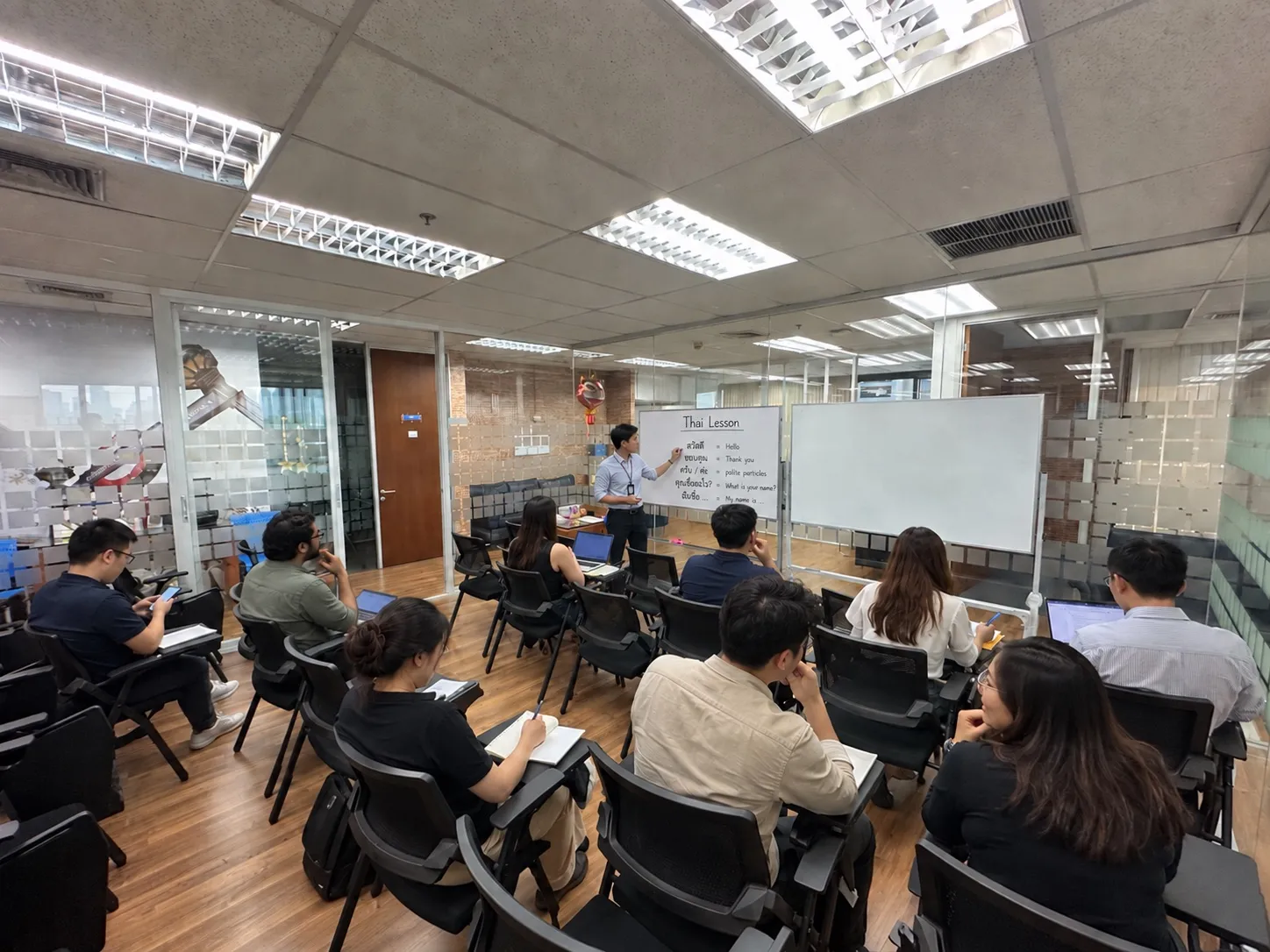
To say hello in Thai, use สวัสดีครับ (sawatdee khrap) if you are a male speaker or สวัสดีค่ะ (sawatdee kha) if you are a female speaker. The difference is the polite particle at the end. It follows you as the speaker, not the person you are greeting.
สวัสดี (sawatdee) is the standard Thai greeting. You can use it in the morning, afternoon or evening, which makes it a useful starting phrase for any beginner. This guide shows you how to choose the right ending, pronounce the greeting and avoid mixing up the 2 Thai spellings that learners often see as “ka.” For a wider set of practical expressions, continue with these Thai phrases to know.
How to Choose Between ครับ (khrap) and ค่ะ (kha)
Choose ครับ (khrap) if you are a male speaker and ค่ะ (kha) if you are a female speaker. The ending is based on the person speaking. It does not change according to the gender of the person you greet.
| Speaker | Complete Thai greeting | Learner-friendly romanization | Meaning |
|---|---|---|---|
| Male speaker | สวัสดีครับ | sawatdee khrap | Hello, said politely by a male speaker |
| Female speaker | สวัสดีค่ะ | sawatdee kha | Hello, said politely by a female speaker |
Both are established beginner forms of the same greeting. If a man greets a woman, he still says สวัสดีครับ (sawatdee khrap). If a woman greets a man, she still says สวัสดีค่ะ (sawatdee kha). You are choosing your own polite particle.
Romanization may write ครับ as “khrap” or “krub.” These English spellings point to the same Thai polite particle, but neither captures every detail of Thai pronunciation.
Sawadee Ka Meaning
“Sawadee ka” means a polite hello spoken by a woman. In Thai script, it is สวัสดีค่ะ (sawatdee kha). Part 1, สวัสดี (sawatdee), is the greeting. Part 2, ค่ะ (kha), is the female polite particle used here for a statement or greeting.
You may see the greeting written as sawadee, sawasdee or sawatdee. These are different learner spellings for สวัสดี. The Thai script is the fixed reference, while romanization varies according to the system a writer uses. Pick 1 learner spelling for practice, then connect it back to สวัสดี so that alternate spellings do not look like different words.
The complete female greeting is:
สวัสดีค่ะ (sawatdee kha): Hello, spoken politely by a female speaker.
This is a statement, so the final Thai word is ค่ะ (kha). That spelling matters when you move from spoken practice to reading Thai.
Krub Meaning Thai Beginners Should Know
“Krub” is a common English spelling of ครับ (khrap), the polite particle commonly used by a male speaker. It does not mean “hello” on its own in this phrase. สวัสดี (sawatdee) carries the greeting, while ครับ (khrap) adds the polite ending.
The complete male greeting is:
สวัสดีครับ (sawatdee khrap): Hello, spoken politely by a male speaker.
Learn the complete phrase as a short greeting, but keep its 2 parts clear in your mind: สวัสดี (sawatdee) plus ครับ (khrap). Romanization is only an approximate prompt for practice.
Why “Ka” Has 2 Thai Spellings: ค่ะ (kha) and คะ (kha)
Female speakers use ค่ะ (kha) for a polite greeting or statement and คะ (kha) for a polite question. Romanization often writes both as “kha” or “ka,” but the Thai spelling is different.
| Thai particle | Learner-friendly romanization | Use |
|---|---|---|
| ค่ะ | kha | A polite statement or greeting by a female speaker |
| คะ | kha | A polite question by a female speaker |
For hello, use สวัสดีค่ะ (sawatdee kha), because the greeting functions as a statement. In a question, the final particle changes. The question form uses คะ (kha), while the greeting form remains ค่ะ (kha).
This is a good example of where romanization reaches its limit. The English spelling can make 2 different Thai particles look identical. When you learn the Thai alphabet, you can see immediately whether the phrase ends with ค่ะ (kha) or คะ (kha).
How to Pronounce สวัสดี (sawatdee)
Pronounce สวัสดี (sawatdee) approximately as sà-wàt-dii, using a low tone on the initial 2 syllables and a mid tone on the final syllable.
- สะ (sà): low tone
- หวัด (wàt): low tone
- ดี (dii): mid tone
Say the 3 parts smoothly rather than pausing between them. Then add ครับ (khrap) or ค่ะ (kha) as the polite ending. Your complete greeting becomes สวัสดีครับ (sà-wàt-dii khrap) or สวัสดีค่ะ (sà-wàt-dii kha).
Romanization is a reminder, not a pronunciation guarantee. English letters do not fully represent Thai tones or every consonant and vowel detail. Use the Thai script as your reference and practise with listening and feedback. A Thai language course in Bangkok can help you connect the written phrase to the sound used in conversation.

When to Use สวัสดี (sawatdee)
You can use สวัสดี (sawatdee) at any time of day. Thai learners do not need to memorise a different basic hello for morning, afternoon and evening. Add your polite particle and use the same greeting when you meet someone.
This all-day use also explains why สวัสดีครับ (sawatdee khrap) and สวัสดีค่ะ (sawatdee kha) are natural morning greetings. If you want to learn a morning-specific expression, read our guide to good morning in Thai.
สวัสดี (sawatdee) can also close an interaction. However, learners should begin by associating it with greeting someone, because that is its stronger role in current conversation.
How to Reply to Hello in Thai
Reply with the same greeting and use your own polite particle. A male speaker replies สวัสดีครับ (sawatdee khrap). A female speaker replies สวัสดีค่ะ (sawatdee kha). Your ending still depends on you, even when the person who greeted you used a different one.
Here is a short exchange:
Speaker 1, male: สวัสดีครับ (sawatdee khrap). Hello.
Speaker 2, female: สวัสดีค่ะ (sawatdee kha). Hello.
That is enough to open a polite conversation. You do not need to invent a longer response or copy the other speaker’s particle. Return the greeting, use the particle that fits you as the speaker and continue naturally.
Your quick checklist is simple:
- Start with สวัสดี (sawatdee).
- Add ครับ (khrap) for a male speaker or ค่ะ (kha) for a female speaker.
- Use คะ (kha) only when a female speaker is ending a polite question.
- Practise sà-wàt-dii as 3 connected syllables.
FAQ
Do I say khrap or kha?
Say ครับ (khrap) if you are a male speaker and ค่ะ (kha) if you are a female speaker. The choice follows you as the speaker, not the person you are greeting. The full forms are สวัสดีครับ (sawatdee khrap) and สวัสดีค่ะ (sawatdee kha).
Why are there 2 ways to spell ka in Thai?
The 2 Thai spellings have different uses: ค่ะ (kha) ends a polite statement or greeting, while คะ (kha) ends a polite question for a female speaker. Romanization may write both as ka or kha, so check the Thai script to distinguish them.
Can I use sawatdee in the morning and evening?
Yes. สวัสดี (sawatdee) is an all-purpose greeting that works in the morning, afternoon and evening. Add ครับ (khrap) or ค่ะ (kha) according to the speaker, and you have a complete polite greeting for any time of day.
Is sawatdee also goodbye?
สวัสดี (sawatdee) can also be used when ending an interaction, although it is more strongly associated with saying hello in current conversation. A beginner can recognise this farewell use while initially learning it as the standard greeting. Use the same speaker-based polite ending in either context.