How to Say Thank You in Thai
Learn to say thank you in Thai: ขอบคุณครับ (khop khun khrap) for men and ขอบคุณค่ะ (khop khun kha) for women, plus stronger thanks, replies and common mistakes.
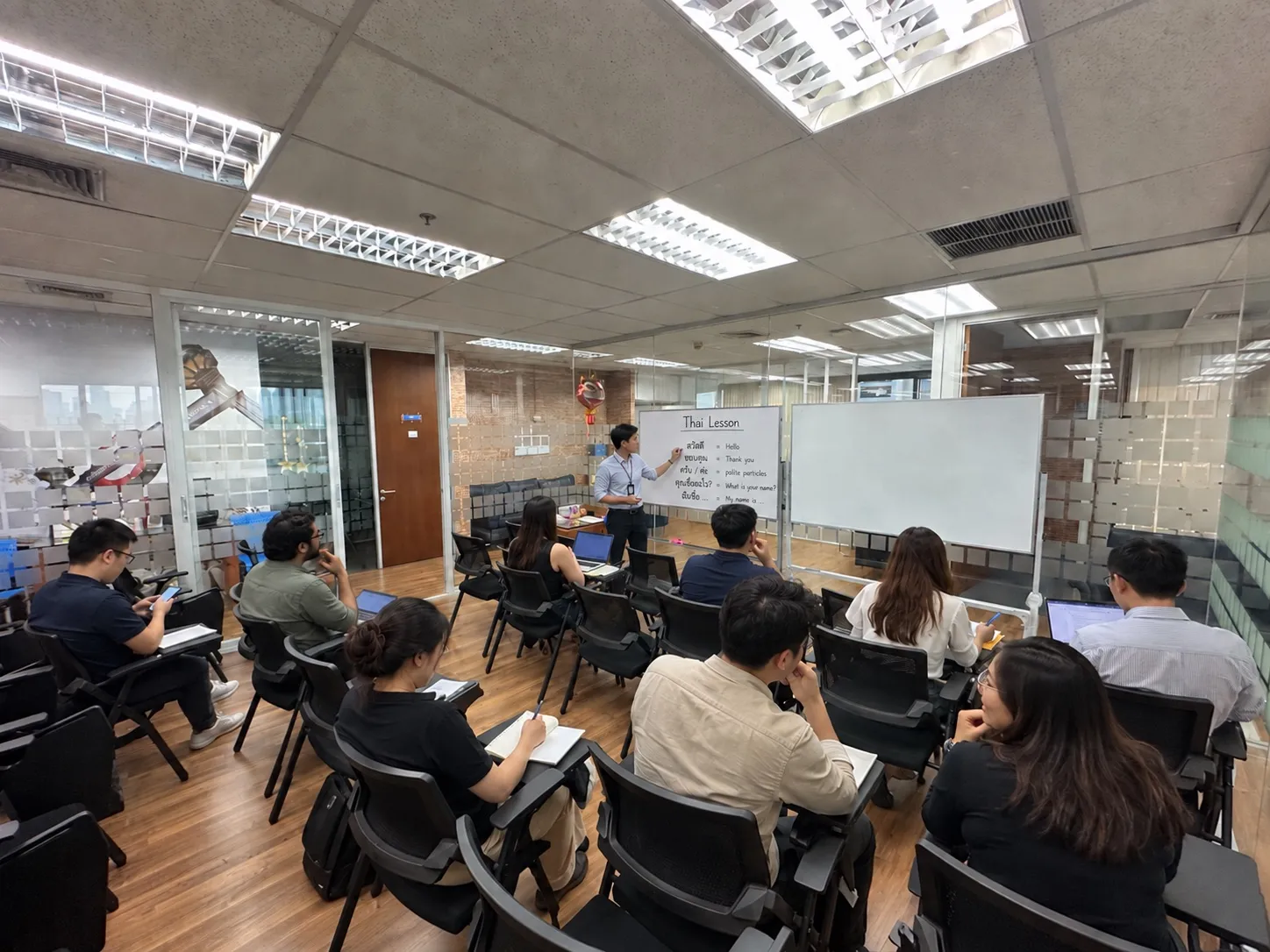
To say thank you in Thai, use ขอบคุณครับ (khop khun khrap) if you are a male speaker or ขอบคุณค่ะ (khop khun kha) if you are a female speaker. The core phrase is ขอบคุณ (khop khun), and the ending marks both politeness and the gender of the person speaking. In this lesson you will learn how to pronounce the phrase, make it stronger, recognise a casual form to avoid overusing, and reply when someone thanks you. If you want more everyday expressions beyond this one, our guide to Thai phrases to know is a good next stop.

Step 1: Learn the Core Phrase ขอบคุณ (Khop Khun)
ขอบคุณ (khop khun) is the standard Thai expression for thank you. It is the core expression taught in this lesson, and the forms you add to it change the strength and register of your thanks.
Say it slowly as 2 beats, khop khun, with a short pause between the syllables, then repeat until the 2 beats feel natural. 1 honest note: our romanization is learner-friendly and approximate, not an exact guide to Thai sounds. Listening practice is what refines your pronunciation over time.
Step 2: Add the Polite Ending for Your Gender
Male speakers end with ครับ (khrap) and female speakers end with ค่ะ (kha) in statements, so men say ขอบคุณครับ (khop khun khrap) and women say ขอบคุณค่ะ (khop khun kha). This ending is a polite particle. It signals courtesy and identifies the speaker’s gender, not the gender of the listener, so you keep your own particle no matter who you are talking to.
| Particle | Romanization | Who uses it | When |
|---|---|---|---|
| ครับ | khrap | Male speakers | Statements and questions |
| ค่ะ | kha | Female speakers | Statements |
| คะ | kha | Female speakers | Questions |
Here is a distinction most guides blur: ค่ะ (kha) and คะ (kha) are different particles, even though both use kha in learner-friendly romanization. ค่ะ (kha) is the female statement particle, while คะ (kha) is the female question particle. Romanization cannot show that tonal difference exactly, which is 1 reason script and listening practice matter. For male speakers, ครับ (khrap) covers both statements and questions, so there is nothing extra to track.
Step 3: Make It Stronger with ขอบคุณมาก (Khop Khun Mak)
Adding มาก (mak) to ขอบคุณ (khop khun) gives ขอบคุณมาก (khop khun mak), meaning thank you very much. With the polite particle attached, men say ขอบคุณมากครับ (khop khun mak khrap) and women say ขอบคุณมากค่ะ (khop khun mak kha).
Use this stronger form when you want your thanks to carry more weight than the plain form. Keeping the polite particle attached keeps the phrase courteous for both genders.

Step 4: Know When ขอบใจ (Khop Jai) Is Too Casual
ขอบใจ (khop jai) is a more casual thank you used with close friends or people younger than the speaker, so beginners should not use it as their default with strangers or elders. It signals familiarity rather than courtesy.
The practical rule is simple: if you are unsure of the relationship, use the full polite form from Step 2. It is a safe default, while casual forms depend on closeness you may not have yet. The same particle pattern appears when you say sorry in Thai.
Step 5: Reply When Someone Thanks You
ไม่เป็นไร (mai pen rai) is a common response that can mean you are welcome, no problem or it is all right. Attach your own polite particle, so male speakers say ไม่เป็นไรครับ (mai pen rai khrap) and female speakers say ไม่เป็นไรค่ะ (mai pen rai kha).
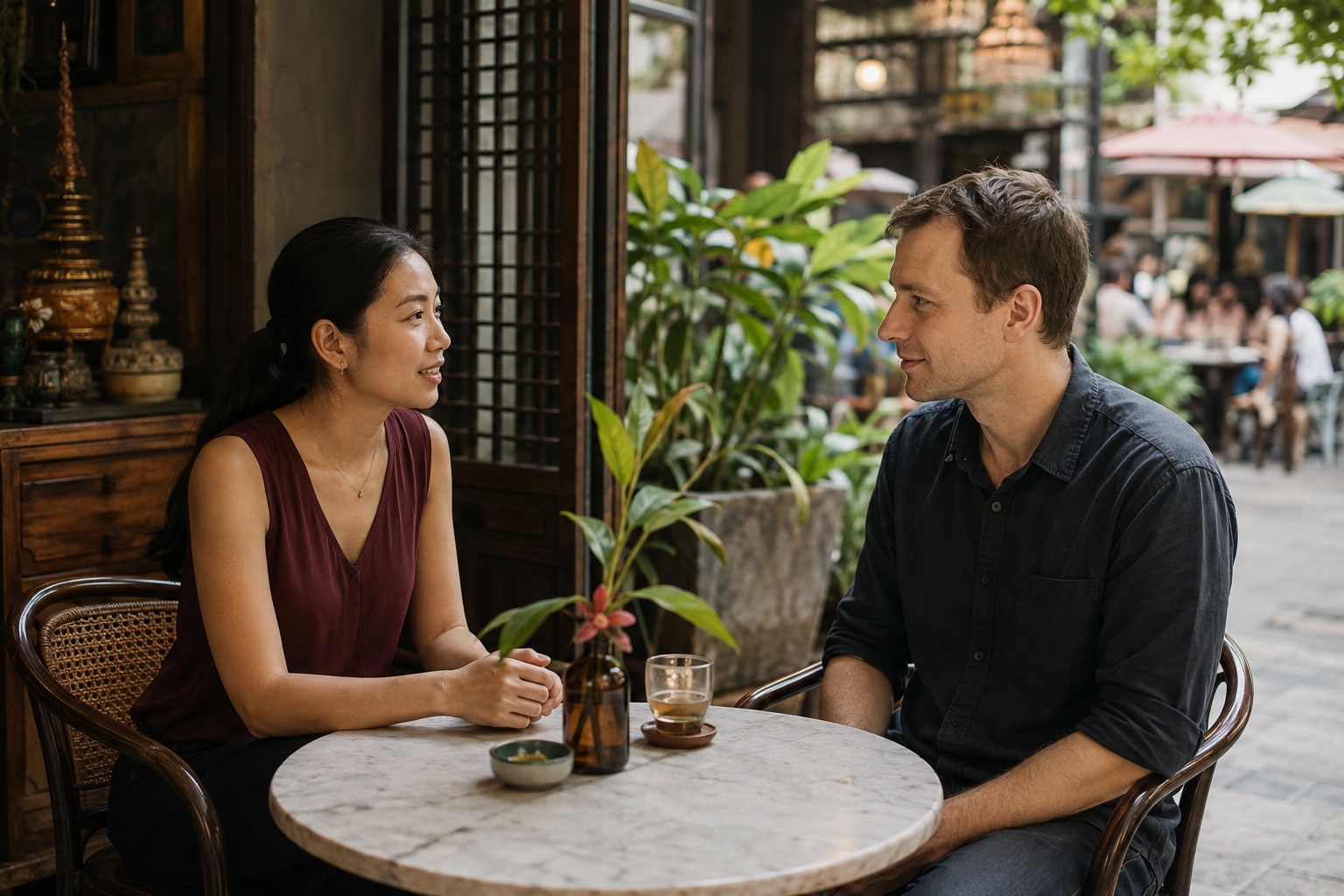
Try this short dialogue aloud, using only phrases from this lesson:
- Thai speaker: ขอบคุณค่ะ (khop khun kha): Thank you, said by a female speaker.
- You: ไม่เป็นไรครับ (mai pen rai khrap): You are welcome, said by a male speaker. Female speakers reply ไม่เป็นไรค่ะ (mai pen rai kha).
Speak both lines out loud a few times until the particle feels automatic at the end. The goal is not just to be thanked politely but to keep the exchange going without freezing when the thanks come back your way.
Step 6: Avoid These Common Beginner Mistakes
The most common mistakes are dropping the polite particle, using the wrong ending for your gender, confusing ค่ะ (kha) with คะ (kha), and trusting romanization as exact pronunciation. Each one has a straightforward fix.
- Dropping the polite particle. Saying only ขอบคุณ (khop khun) leaves out the politeness marker. Keep the particle attached: ครับ (khrap) for men, ค่ะ (kha) for women in statements.
- Using the wrong gender ending. The particle matches you, the speaker. Men do not switch to ค่ะ (kha) and women do not switch to ครับ (khrap), regardless of who is listening.
- Confusing ค่ะ (kha) with คะ (kha). ค่ะ (kha) is the female statement particle and คะ (kha) is the female question particle. Men use ครับ (khrap) for both.
- Treating romanization as exact. Our romanization is learner-friendly and approximate. Listening and teacher feedback are what refine the actual sounds.
Working on pronunciation is easier once you can read some Thai script, so learning the Thai alphabet is a natural next step.
FAQ: Saying Thank You in Thai
How do you say thank you in Thai?
Say ขอบคุณ (khop khun). Male speakers add ครับ (khrap) for ขอบคุณครับ (khop khun khrap), and female speakers add ค่ะ (kha) for ขอบคุณค่ะ (khop khun kha). The particle makes the phrase polite and marks the speaker’s gender.
What is the difference between ค่ะ (kha) and คะ (kha)?
ค่ะ (kha) is the female statement particle, while คะ (kha) is the female question particle. Both romanize as kha, so the difference shows in Thai script and sound rather than in the letters. Male speakers use ครับ (khrap) for both statements and questions, so they do not need this distinction.
How do you say thank you very much in Thai?
Add มาก (mak) to get ขอบคุณมาก (khop khun mak), meaning thank you very much. The full polite forms are ขอบคุณมากครับ (khop khun mak khrap) for men and ขอบคุณมากค่ะ (khop khun mak kha) for women in everyday speech.
What should you say when someone thanks you in Thai?
A common reply is ไม่เป็นไร (mai pen rai), which can mean you are welcome, no problem or it is all right. Add your particle: ไม่เป็นไรครับ (mai pen rai khrap) for men and ไม่เป็นไรค่ะ (mai pen rai kha) for women. It keeps a polite exchange feeling natural.
Is ขอบใจ (khop jai) polite to use with strangers?
It is more casual, so it is usually not the default with strangers or elders. ขอบใจ (khop jai) fits close friends or people younger than the speaker. When the relationship is unclear, use ขอบคุณครับ (khop khun khrap) or ขอบคุณค่ะ (khop khun kha).
If you want to build on these phrases with structured lessons, you can study Thai with us in Bangkok. We would be glad to help you take the next step.