Best Night Markets in Bangkok: 9 Places Worth Visiting
Compare 9 Bangkok night markets for food, shopping and atmosphere, with transport tips, useful Thai phrases and advice to check current opening details.
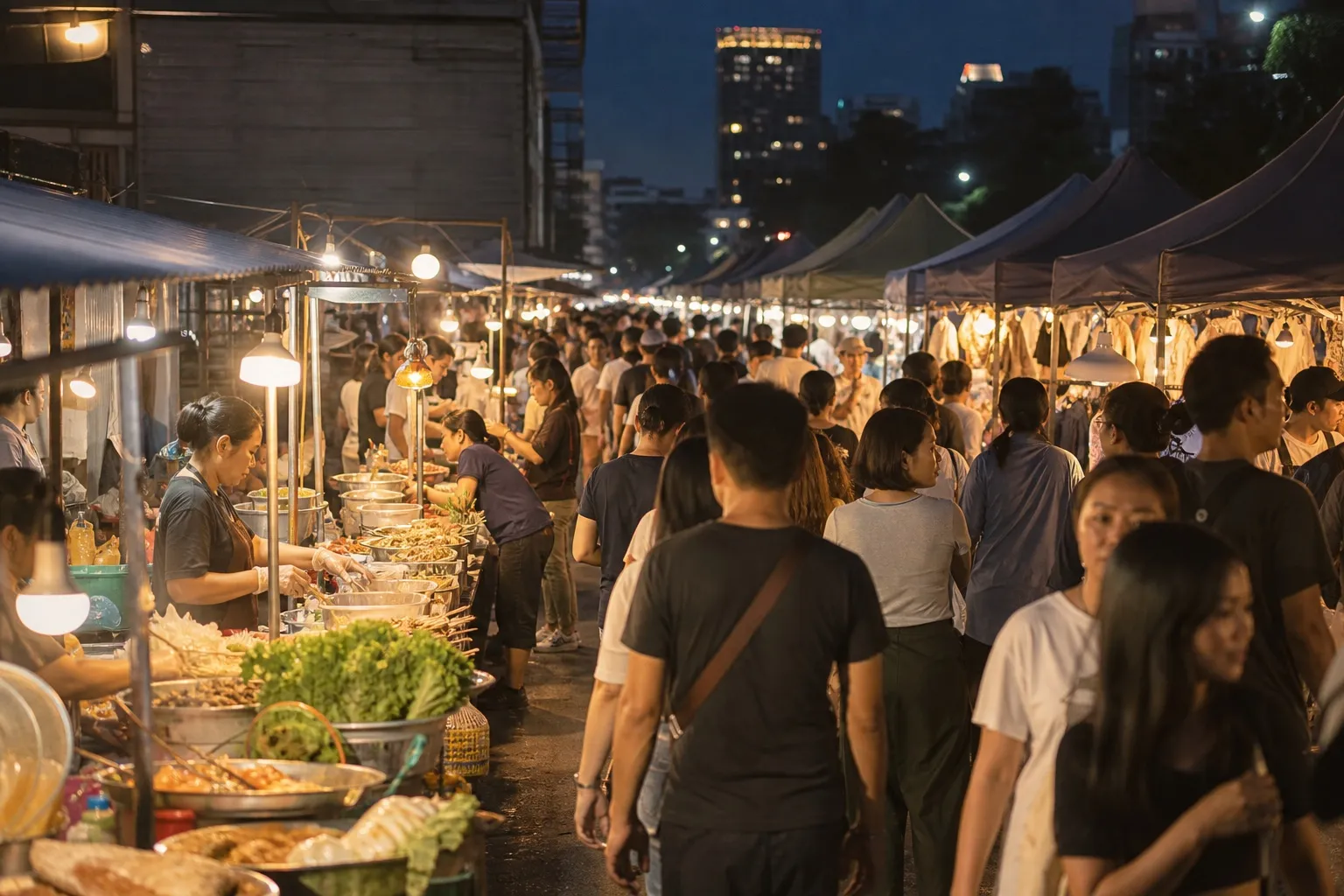
Bangkok after dark is not only about rooftop bars and late night noodles. It is also about open air markets where the heat drops a little, the lights come on, and the city slows into a more social rhythm. Night markets in Bangkok range from compact neighborhood spots to large weekend destinations. Some are better for vintage clothing, some for street food, some for souvenirs, and some for simply walking around with a cold drink. This guide covers a useful mix of Bangkok night markets, what each one is good for, how to prepare, which Thai phrases help, how to behave, and how to check current opening information before you go.
What to know before visiting any Bangkok night market
Bangkok night markets change often. A market that was busy last year may have moved, reduced its hours, or closed. Always check current information on the day you plan to visit. The most reliable method is to search for the market name in Thai or English on Google Maps and look at recent reviews from the past two weeks. Recent photos and comments usually show whether the market is still active.
Opening days and hours vary. Some markets operate every night. Others open only on weekends. Rain can close outdoor sections early. Public holidays can change the schedule. If a market has an official Facebook page or Instagram account, check the most recent post. Do not rely on older travel blogs or printed guides.
Bring cash in small denominations. Many stalls do not accept cards. 20, 50, and 100 baht notes are the most useful. Some vendors use QR code payment through Thai bank apps, but visitors without a Thai bank account should carry cash.
Dress for heat and walking. Light clothing, comfortable shoes, and a small bag are enough. Some markets have uneven ground, puddles, and narrow walkways. Carry a small bottle of water. Most markets sell drinks, but having water with you helps in crowded sections.
How to get ready for a Bangkok night market
Plan your route before you leave. Bangkok traffic in the evening can be slow. If you use the BTS Skytrain or MRT subway, check the last train time. Many night markets are near a station, but not all are within a short walk. A motorcycle taxi or short ride hailing app trip may be needed for the last kilometer.
Eat lightly before you arrive if you plan to try many foods. Night market portions are often small and meant for sharing. Walk around once before buying. This helps you see the full range of food and compare prices. It also helps you find seating areas, trash bins, and restrooms.
Keep your phone charged. You may need it for maps, translation, payment, or calling a ride. A power bank is useful if you plan to stay for two hours or more.
If you are learning Thai, a night market is a practical place to practice numbers, food names, and polite requests. You do not need to speak Thai to enjoy the market, but a few phrases make transactions smoother and are generally well received.
Useful Thai phrases for night markets
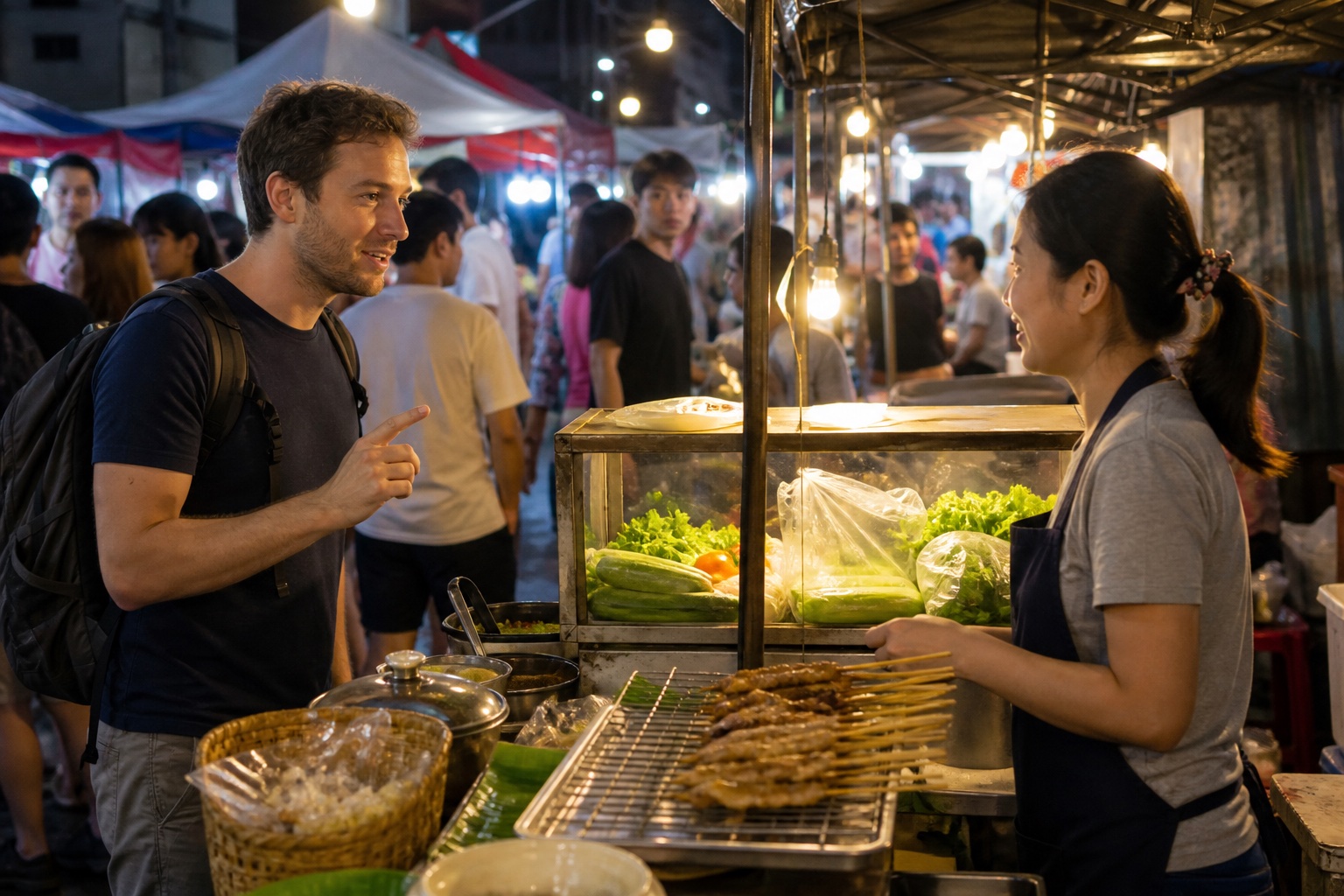
These phrases are written in Thai script with a simple transliteration. The transliteration is only a rough guide. Thai is a tonal language, so listen to how vendors say the words and try to match the sound.
How much is this? อันนี้เท่าไหร่ (an nee thao rai)
Can you reduce the price a little? ลดหน่อยได้ไหม (lot noi dai mai)
Use this politely and only when bargaining is expected. At food stalls, bargaining is not normal. At clothing or souvenir stalls, a small friendly discount is sometimes possible.
I would like this one. เอาอันนี้ (ao an nee)
Not spicy, please. ไม่เผ็ด (mai phet)
A little spicy is okay. เผ็ดนิดหน่อย (phet nit noi)
Delicious. อร่อย (a roi)
Where is the restroom? ห้องน้ำอยู่ที่ไหน (hong nam yoo tee nai)
No plastic bag, thank you. ไม่เอาถุงครับ / ค่ะ (mai ao thung khrap / kha)
Men add ครับ (khrap) at the end of a sentence to be polite. Women add ค่ะ (kha). These polite particles are useful even if your Thai is limited.
Check, please. เก็บเงินด้วยครับ / ค่ะ (kep ngoen duay khrap / kha)
Use this at a seated food stall when you are ready to pay.
Can I take a photo? ถ่ายรูปได้ไหม (thai roop dai mai)
Ask before photographing vendors or their goods. Most people say yes, but asking first is respectful.
How to behave at Bangkok night markets
Move to the side if you stop to look at something. Walkways can be narrow, and stopping in the middle blocks the flow. If you want to take a photo, step out of the main path.
Do not touch food that you are not buying. Point instead. If you want to inspect clothing or goods, ask or wait for the vendor to hand it to you.
Bargain with a smile. A short, friendly negotiation is normal at some non food stalls. If the vendor does not lower the price, accept it or walk away politely. Do not bargain aggressively or show frustration.
Dress modestly enough for public spaces. Bangkok is generally relaxed, but markets are shared public areas. Shirts and shorts are fine. Swimwear is not appropriate.
Dispose of trash properly. Some markets have central trash points. If you cannot find one, hold onto your waste until you see a bin. Littering is frowned upon.
Watch your belongings. Night markets are safe overall, but crowded areas attract pickpockets. Keep your bag in front of you in dense sections. Do not leave your phone in a back pocket.
Be patient with language barriers. Pointing, smiling, and using a translation app all work. Raising your voice does not help and can make the situation uncomfortable.
How to verify current opening information
Use these steps before you travel to any market.
- Open Google Maps and search for the market name.
- Check the hours listed, but do not trust them completely.
- Read the 10 most recent reviews. Look for comments from the last 14 days.
- Look at recent photos. If the most recent photos are from several months ago, the market may be less active.
- Search for the market name on Facebook or Instagram. Check the date of the newest post.
- If you are already in Bangkok, ask your hotel front desk or a local friend. They often know if a market has moved or changed.
This matters because Bangkok night markets are not permanent in the way that shopping malls are. Land use changes, lease agreements end, and markets relocate. A little checking saves you from arriving at an empty lot.
The Bangkok Metropolitan Administration market directory can provide an additional official reference for markets under its administration, but it does not replace checking the venue’s own current information.
Best night markets in Bangkok
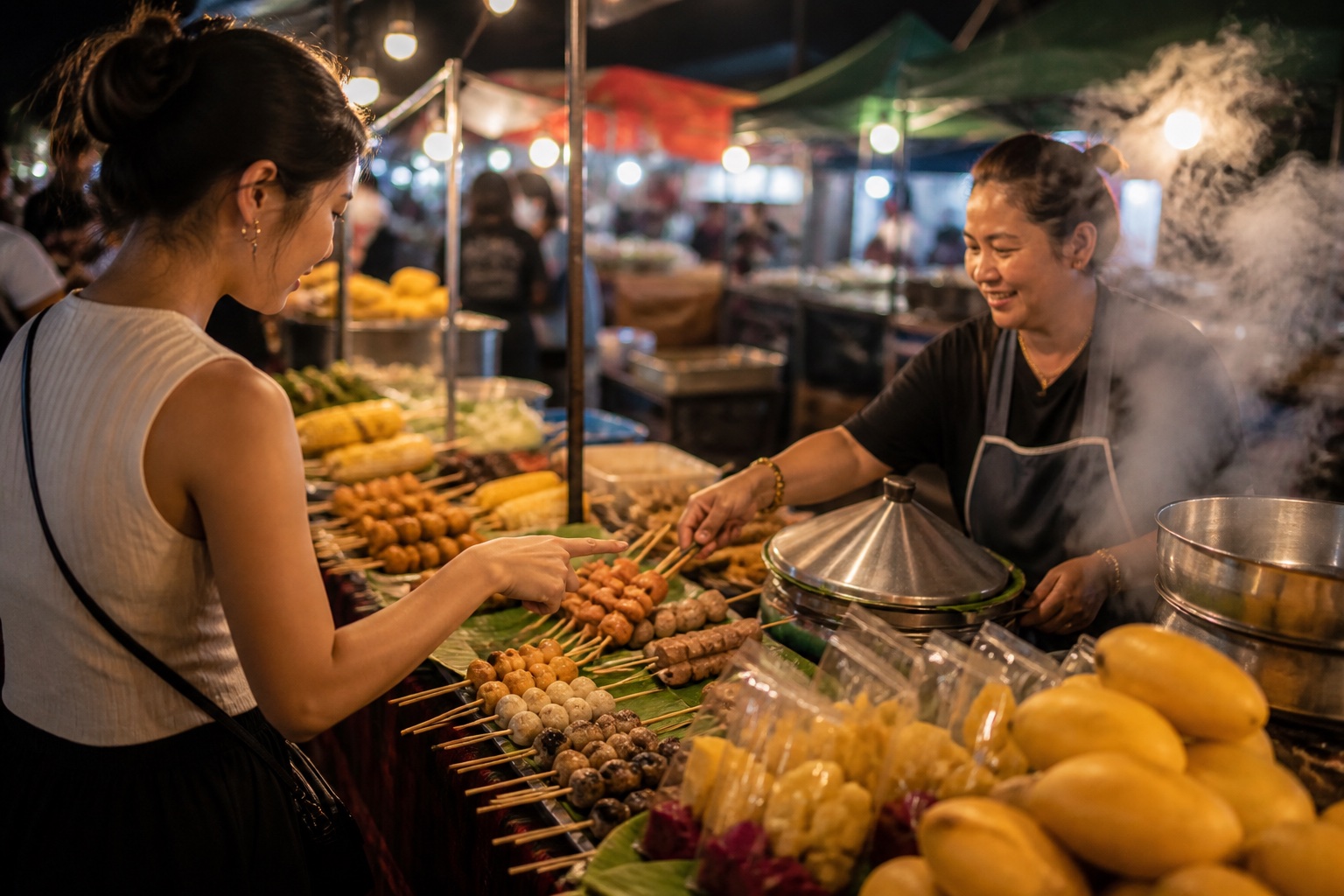
The markets below are grouped by what they are best for. They are not ranked from best to worst because the right market depends on what you want to do.
Best for first time visitors: Talad Rot Fai Srinakarin
Talad Rot Fai Srinakarin is a large open air market in the eastern part of Bangkok. It is often called the Train Night Market Srinakarin. The original Talad Rot Fai was near Chatuchak, but the current main location is on Srinakarin Road.
This market is best for a first visit because it has a broad mix. You will find vintage clothing, old cameras, antique style furniture, sneakers, toys, food, bars, and live music areas. The market is spread out, so it feels less cramped than smaller central markets.
Getting there takes more effort than markets near the BTS. The nearest BTS station is not within a short walk for most people. Many visitors take the BTS to On Nut or Udom Suk and then use a ride hailing app or taxi. Check the route before you go.
The market is usually busiest on Friday, Saturday, and Sunday evenings. Some sections may open on other days, but the weekend is the safest time to visit. Arrive after 18:00. The market runs late, often past midnight.
This market is good for browsing rather than buying essentials. It is a place to walk slowly, look at unusual objects, and eat from many small stalls. If you want a market that feels like an evening out rather than a quick shopping stop, this is a strong choice.
Best for street food variety: Jodd Fairs
Jodd Fairs is a centrally located night market that became well known after the older Ratchada Train Market closed. It is near Phra Ram 9 MRT station, which makes it easy to reach.
Jodd Fairs is best for street food. The market has a high concentration of food stalls in a compact area. You will see grilled seafood, skewers, fruit shakes, noodles, fried snacks, and desserts. There are also clothing and souvenir stalls, but food is the main draw.
The market is popular with both Thai visitors and international tourists. Prices are generally moderate for a central Bangkok market. Some items cost more than at neighborhood markets, but the convenience and variety are part of the appeal.
Seating can be limited at peak times. If you visit between 19:00 and 21:00 on a weekend, expect crowds. Going earlier, around 17:30 or 18:00, gives you more space to look around before the busiest period.
Jodd Fairs is a good place to practice Thai food phrases. Many vendors are used to non Thai speakers, but saying ไม่เผ็ด (mai phet) for not spicy or อร่อย (a roi) for delicious is appreciated.
Best for a local neighborhood feel: Talad Rot Fai Ratchada
There is sometimes confusion between the old Ratchada Train Market and newer markets using a similar name. The original Ratchada Train Market closed and was replaced by other developments. Some smaller markets in the Ratchada area still operate, but they are not the same as the old large market.
If you search for Talad Rot Fai Ratchada, check recent reviews carefully. Some listings point to a smaller market that is active, while others refer to the old closed location. The safest approach is to look for recent photos and comments from the past month.
When an active market in the Ratchada area is open, it tends to have a more local feel than Jodd Fairs. You may see fewer international tourists and more Thai families and office workers. Food is usually affordable, and the atmosphere is relaxed.
Because the situation changes, do not plan a whole evening around this area without confirming that a market is actually operating. If you are already near the Thailand Cultural Centre MRT station, check Google Maps for nearby night markets and read the latest reviews before walking over.
Best for vintage and secondhand goods: Chatuchak Friday Night Market
Chatuchak Weekend Market is famous as a daytime destination, but parts of the area also open on Friday evening. The Friday night section is smaller than the full weekend market, but it has a good selection of vintage clothing, secondhand shoes, bags, and collectibles.
This is best for people who want a vintage shopping experience without the full daytime heat. The Friday evening market is less crowded than Saturday or Sunday daytime, though popular sections can still be busy.
Getting there is straightforward. Take the BTS to Mo Chit or the MRT to Chatuchak Park or Kamphaeng Phet. From the station, follow signs to the market area. The Friday night section may not be in the same zone as the main weekend stalls, so check a map or ask staff at the station.
Not all Chatuchak sections open on Friday night. If you specifically want plants, home decor, or art, the weekend daytime market is better. For clothing and accessories, Friday night is enough.
Bargaining is common at Chatuchak for non food items. Use ลดหน่อยได้ไหม (lot noi dai mai) with a smile. Start with a friendly tone and do not push too hard.
Best for souvenirs and gifts: Asiatique The Riverfront
Asiatique is different from a traditional night market. It is a semi open air shopping and dining area by the Chao Phraya River. It is more organized and more commercial than street markets, but it is included here because many visitors use it as a night market experience.
Asiatique is best for souvenirs, gifts, and a comfortable evening by the river. The stalls and shops sell Thai crafts, clothing, accessories, soaps, teas, and decorative items. Prices are higher than at street markets, but the setting is cleaner and more relaxed.
There are many restaurants and food stalls. The food range is broad, from Thai dishes to pizza and seafood. It is a good option if you are with a group and people want different things.
Getting there usually involves a short boat ride from Sathorn Pier, which connects to Saphan Taksin BTS station. The boat service may have a fee or be free depending on the current arrangement. Check the latest information before you go. You can also reach Asiatique by taxi or ride hailing app.
Asiatique is less about bargaining and more about fixed prices. It is a good place to buy gifts if you prefer a calmer shopping environment. The riverside walk is pleasant in the evening.
Best for a quick central stop: Patpong Night Market
Patpong Night Market operates in the Silom area, near Sala Daeng BTS and Si Lom MRT. It is a small market set up along a street that is also known for nightlife. The market itself is a row of stalls selling T shirts, bags, watches, souvenirs, and some food.
This market is best for a quick stop if you are already in Silom for dinner or drinks. It is not a destination market in the way that Srinakarin or Jodd Fairs is. The selection is limited and aimed largely at tourists.
Bargaining is expected at Patpong. Vendors often quote a high first price. A calm counter offer usually works. If the price does not come down to something you are comfortable with, walk away. There will be another stall selling a similar item.
The area around the market has many bars and clubs. If you are not interested in nightlife, you can still visit the market, but be aware that the street has a particular atmosphere after dark. It is safe, but it is not a quiet neighborhood market.
Patpong is convenient if you are staying in Silom or Sathorn and want a short evening walk with some shopping. For food, you may find better options at nearby restaurants or at other markets.
Best for a relaxed local evening: Indy Market Dao Khanong
Indy Market Dao Khanong is a smaller night market in the Thonburi side of Bangkok. It is less known to international visitors and has a more local character.
This market is best for a relaxed evening without large tourist crowds. You will find food stalls, casual clothing, phone accessories, and some live music. The atmosphere is easygoing, and prices are generally lower than at central tourist markets.
Getting there takes a little more planning. The market is not directly on a BTS or MRT line. Many people take the BTS to Wongwian Yai and then a short taxi or motorcycle taxi ride. Check the route and current opening days before you go.
Indy Market is a good place to practice Thai in a real setting. Vendors may be less accustomed to English, so phrases like อันนี้เท่าไหร่ (an nee thao rai) for how much and เอาอันนี้ (ao an nee) for I want this one are genuinely useful.
Because it is smaller, you can see most of the market in an hour or two. It pairs well with an early dinner and a slow walk.
Best for a market plus food court combo: Huamum Market
Huamum Market is a mid sized night market in the northern part of Bangkok, not far from the Chatuchak area. It is sometimes spelled Hua Mum. The market has a mix of clothing, accessories, plants, and a large food section.
Huamum is best for people who want a market experience with plenty of seating for food. The food court area is larger than at some street markets, with tables and a range of Thai dishes. It is a comfortable place to eat without balancing a plate while standing.
The market is popular with local residents and has a steady evening crowd. It is less intense than Jodd Fairs but busier than a small neighborhood market.
Getting there usually means a taxi or ride hailing app from a nearby BTS or MRT station. Check the route in advance. The market is not a short walk from a station for most visitors.
Huamum is a good choice if you want to shop a little, eat a proper meal, and sit down for a while. It is not as large as Srinakarin, but it is easier to navigate.
Best for a short evening walk: Liab Duan Night Market
Liab Duan Night Market is located along Ramintra Road in the northern part of Bangkok. It is a long market that runs beside the road, with a mix of food, clothing, secondhand goods, and casual dining.
This market is best for people staying in northern Bangkok who want a local market without traveling to the city center. It is not a practical choice if you are staying near the river or in Silom, because the travel time is significant.
The market has a relaxed, local feel. You will see families, couples, and groups of friends. Food is a major part of the experience, with many stalls and small restaurants.
Because it is less central, fewer international tourists visit. English is less widely spoken, so a few Thai phrases help. Even simple words like เอา (ao) for take or want and ไม่เผ็ด (mai phet) for not spicy make ordering easier.
Check current opening days before you go. Some sections may open more days than others.
How to combine a night market with learning Thai
If you are studying Thai or thinking about it, a night market is one of the best real world practice environments. The vocabulary is practical: numbers, food, colors, sizes, and polite requests. Vendors are usually patient with learners who try.
A typical exchange might go like this.
You point to a shirt. อันนี้เท่าไหร่ (an nee thao rai) How much is this? Vendor says a price. ลดหน่อยได้ไหม (lot noi dai mai) Can you reduce it a little? Vendor gives a new price. เอาอันนี้ (ao an nee) I will take this one. ขอบคุณครับ / ค่ะ (khop khun khrap / kha) Thank you.
That is a complete transaction using only a few phrases. It works at clothing stalls, souvenir stalls, and some non food vendors.
At food stalls, the exchange is simpler. เอาอันนี้ (ao an nee) I want this one. ไม่เผ็ด (mai phet) Not spicy. ทานที่นี่หรือกลับบ้าน (thaan tee nee rue glap baan) Eat here or take away? กลับบ้าน (glap baan) Take away.
Listening for the question ทานที่นี่หรือกลับบ้าน (thaan tee nee rue glap baan) is useful. It means eat here or take home. You can answer ที่นี่ (tee nee) for here or กลับบ้าน (glap baan) for take away.
If you want structured practice before going to a market, a language school can help you build the basic vocabulary and tones. Bangkok Language School offers Thai courses with certified teachers and ED Visa support for students who need a long term study option. Learning numbers, food words, and polite particles in a classroom first makes real market interactions much easier. See the school’s Thai language courses before you plan your market visit.
What to eat at Bangkok night markets
Food is central to the night market experience. These are common items you will see at many markets.
Moo ping หมูปิ้ง (moo ping) Grilled pork skewers. Usually slightly sweet and served with sticky rice.
Khao niew ข้าวเหนียว (khao niew) Sticky rice. Often paired with grilled meat or som tam.
Som tam ส้มตำ (som tam) Green papaya salad. Can be very spicy. Say ไม่เผ็ด (mai phet) if you want it mild.
Kai yang ไก่ย่าง (kai yang) Grilled chicken. A safe choice for most visitors.
Pad thai ผัดไทย (pad thai) Stir fried rice noodles. Widely available and usually mild.
Khanom buang ขนมเบื้อง (khanom buang) Crispy Thai crepes with sweet or savory toppings.
Roti โรตี (roti) Fried flatbread, often served with banana, egg, and condensed milk.
Nam khing น้ำขิง (nam khing) Ginger drink. Warm and soothing after a heavy meal.
Cha yen ชาเย็น (cha yen) Thai iced tea. Sweet and creamy.
Fresh fruit ผลไม้สด (phonlamai sot) Cut fruit sold in bags or cups. Look for mango, pineapple, guava, and watermelon.
If you have food allergies, carry a card with the allergy written in Thai. Show it at the stall before ordering. Do not assume that a dish is free of peanuts, shrimp paste, fish sauce, or egg.
What to buy at Bangkok night markets
Common purchases include:
- T shirts with Thai designs
- Elephant print pants and casual clothing
- Canvas bags and tote bags
- Phone cases and accessories
- Handmade soaps and candles
- Thai snacks and dried fruit
- Small souvenirs like keychains and magnets
- Vintage clothing and secondhand sneakers
- Silver jewelry and simple accessories
Quality varies. Check stitching on clothing, test zippers, and look at the item in good light. At some stalls, you can try on clothing in a small fitting area. Ask the vendor.
For food gifts, buy items that are sealed and have a clear expiry date. Dried mango, coconut candy, and packaged curry pastes travel well.
How to stay comfortable and safe
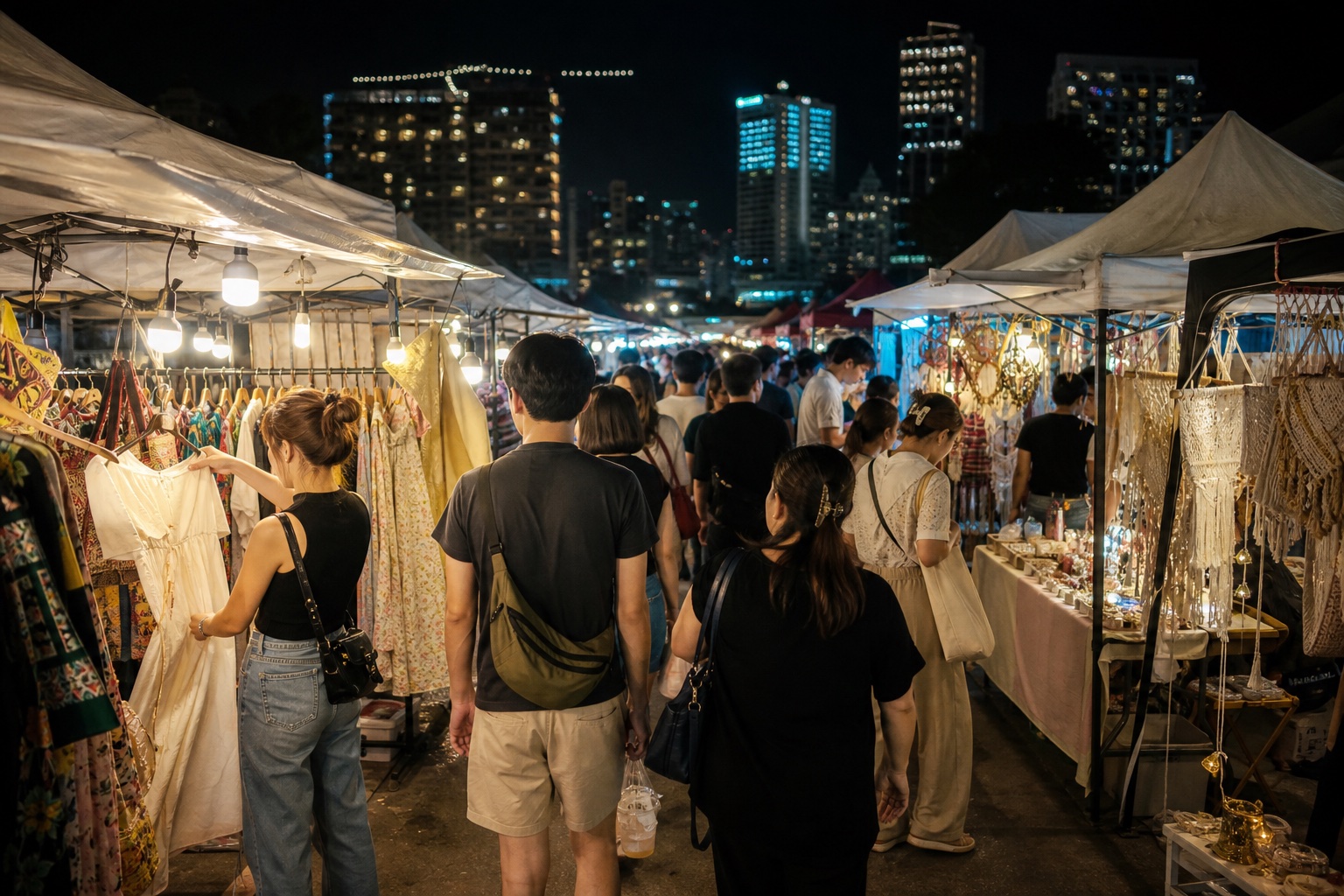
Drink water regularly. Evening temperatures in Bangkok are still warm, and walking between stalls adds up.
Use restrooms when you see them. Not all markets have many public restrooms. Some charge a small fee, usually 5 or 10 baht. Carry coins.
Keep a small pack of tissues. Some restrooms do not provide toilet paper.
Watch for motorbikes. Some markets allow motorbikes to pass through certain sections. Stay alert and step aside when you hear an engine.
If you feel unwell, sit down and drink water. Most markets have a seating area or a nearby convenience store with air conditioning.
Know your exit. Large markets can be disorienting. Take a photo of the entrance or drop a pin on your map app when you arrive.
How to get to Bangkok night markets
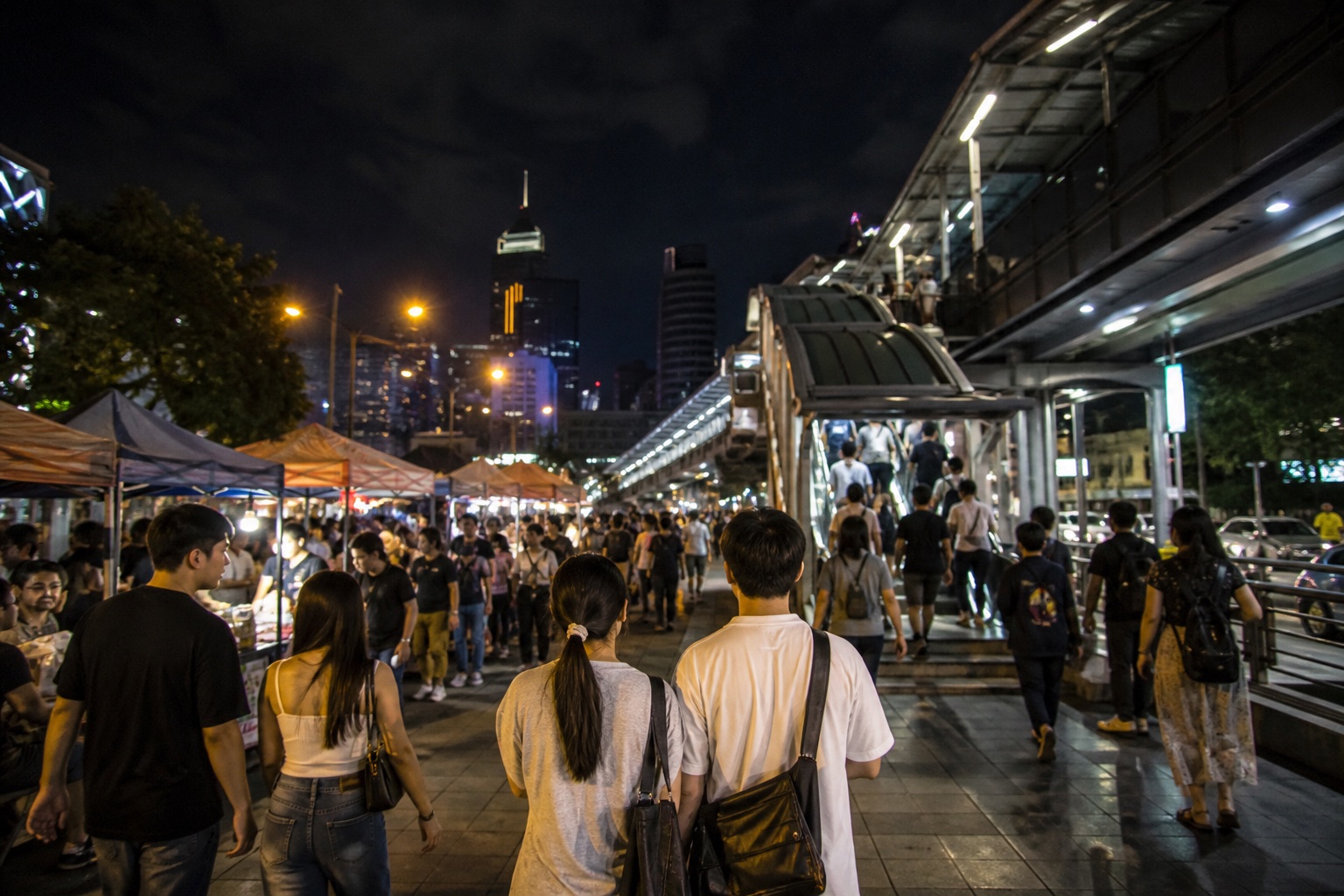
Most night markets are reachable by a combination of BTS, MRT, taxi, motorcycle taxi, or ride hailing app.
The BTS Skytrain runs until around midnight, but last train times vary by station and direction. Check the sign at the station or ask staff. The MRT has similar hours.
Ride hailing apps are widely used in Bangkok. They are convenient for the last part of a journey, especially to markets that are not near a station. Traffic can be heavy, so allow extra time.
Motorcycle taxis are faster for short distances. They are inexpensive but less comfortable for long trips. Always wear the helmet provided.
Taxis are available throughout the city. Ask the driver to use the meter. If they refuse, you can find another taxi or use a ride hailing app.
If you are going to a market far from your hotel, plan the return trip before you go. Some areas have fewer taxis late at night. A ride hailing app is usually the most reliable way to get back.
How much time to spend at a night market
A small market like Patpong or Indy Market can be seen in 45 to 90 minutes. A medium market like Jodd Fairs or Huamum is comfortable in 2 hours. A large market like Srinakarin can take 3 hours or more if you stop to eat and browse.
Arrive early if you want to avoid the biggest crowds. Arrive later if you want the full atmosphere with live music and more food stalls open.
Weekday evenings are generally quieter than weekends. If you prefer a relaxed visit, go on a Tuesday or Wednesday. If you want the most complete experience, go on Friday or Saturday.
FAQ
Which Bangkok night market is best for tourists?
There is no single best market for every visitor. A central market with a nearby MRT station is usually the easiest first visit, while a larger weekend market may offer more food, vintage goods and local atmosphere. Check the venue’s current address and opening days before travelling because Bangkok markets can move, rebrand or change their schedules.
Which Bangkok night market is best for food?
Choose a market with a broad food section and enough seating if eating is your main goal. Browse first, compare queues and look for stalls with steady local demand rather than assuming the most photographed dish is the best choice. Food stalls, menus and opening hours change, so treat the market’s current listings as more reliable than an older article.
What should I bring to a Bangkok night market?
Bring a phone with a charged battery, a small amount of cash, water and a bag that closes securely. Wear comfortable shoes because even a compact market can involve a lot of standing. Save the return route before you arrive, especially if the market is far from your hotel or you plan to stay until closing.
How do I get home from a Bangkok night market?
Check the last practical BTS or MRT connection before you enter, then keep a ride-hailing option available for the return journey. Train operating times vary by station and direction, and traffic can make a taxi slow. Do not assume that finding a ride at the market exit will be as easy as it was on arrival.
Is it safe to visit Bangkok night markets alone?
Many visitors go alone, but ordinary city precautions still matter. Keep valuables close, stay in well-lit areas, watch for motorcycles and share your location with someone you trust. If a market feels too crowded or the return route becomes unclear, leave early and use a confirmed taxi or ride-hailing pickup point.